

-3.png)
Welcome to The Tasmanian Approach by The Project Lab. Sharing the latest instalment of our bite-sized reports on how Tasmania and Tasmanian businesses are responding to today’s most pressing issues.
In this edition, we explore the growing importance of values-driven workplaces – and why defining and living organisational values is more complex than many leaders expect.
“I’ve directly seen how tapping into a company’s values can drastically change the entire outlook of a business and its workplace,” says Ben Cashman, Managing Director of The Project Lab.
“Several years ago, we redefined our values around making Tasmania the most liveable island in the world and made a deliberate decision to work only with local Tasmanian organisations. By focusing on the needs of our own market, we’ve developed a deeper understanding of the nuances that shape Tasmania’s economy. Over time, that investment in attention and energy hasn’t just strengthened our impact – it’s significantly improved our own performance as a business.”
“Every time we help a Tasmanian organisation connect and articulate their true values, I’m reminded of just how powerful that approach can be – and how important it is for leaders to stay connected, reflective, and proactive about their values,” he continues.

“These days, our values are literally written on our walls. In hiring, we prioritise values and cultural alignment ahead of skills and experience. Because, we’ve seen the difference.”
Over the last two decades, much has been written about how and why so many employee engagement initiatives often fail.
Bain & Company has found many initiatives fail because the people responsible for driving them are already stretched or under-resourced. Meanwhile, the Harvard Business Review has argued that many corporate values are simply too generic and impersonal to resonate with employees.
Across the research, however, one common factor stands out: insincerity.
“By far, the biggest mistake I see organisations make is defining what they think their values should be, rather than uncovering what their founders, leaders, and people genuinely believe,” Cashman says.
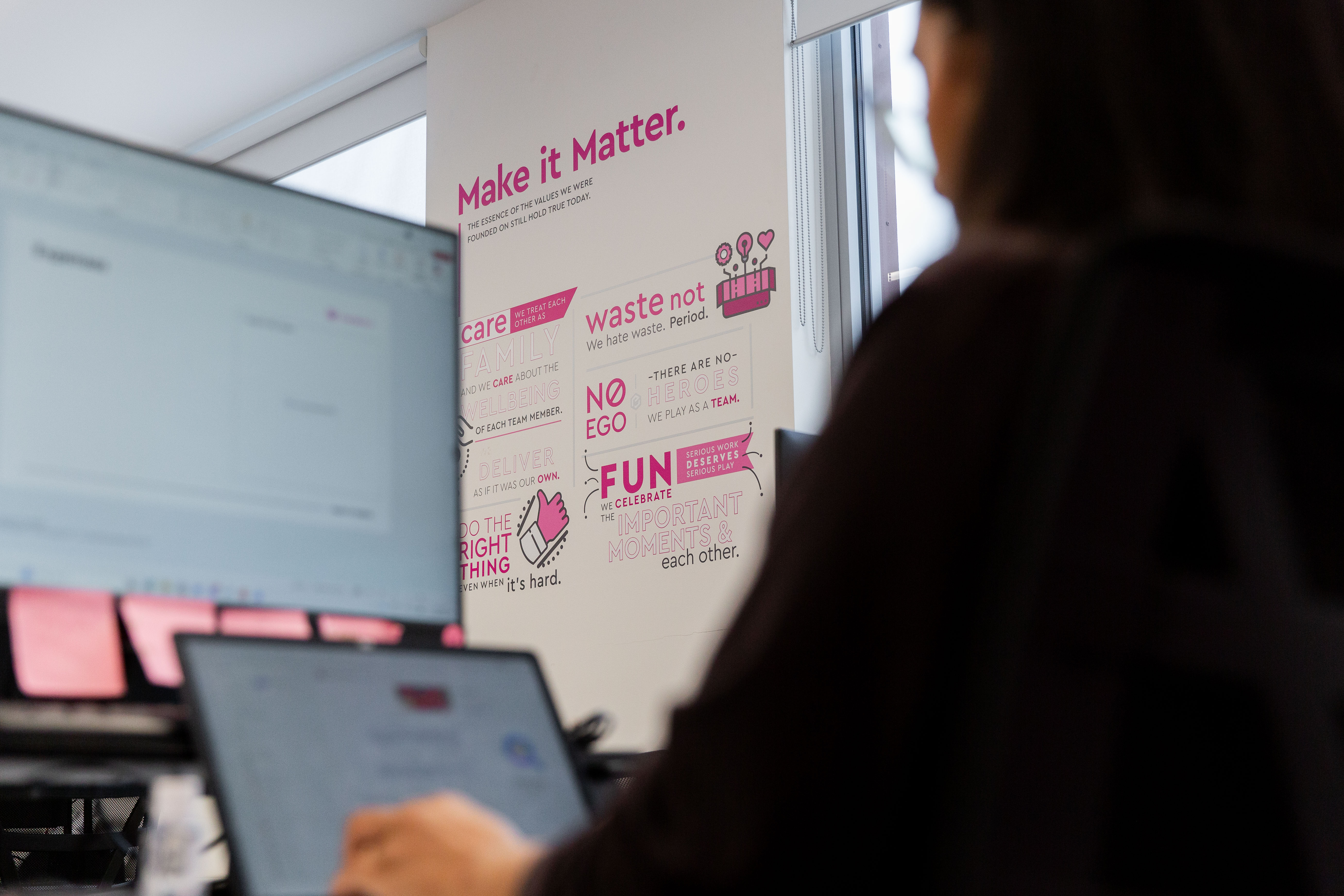
“This isn’t something where a consultant can come in, stick a bunch of values on a poster, and leave. Your values aren’t there to just make people feel nice. Ideally, your values make your work and decisions easier.”
“It’s why organisations undergoing this kind of transformation need strong internal champions dedicated to making sure the values are actually embedded and demonstrated across the business.” he explains. “In business processes, performance management, incentive programmes, everything. It’s an ongoing and iterative process. It’s always asking the question – as a leader, am I acting in line with our values?”
One reputable and long-standing Tasmanian organisation that recently went through this process is Murdoch Clarke Lawyers. As a familiar brand who’ve been serving the Tasmanian community across a full range of legal services for over 100 years, they’ve seen many iterations of growth and change within their internal team culture.
Working alongside The Project Lab, the firm undertook a co-design process to define and embed a set of organisational values that genuinely reflected the culture and aspirations of the business.

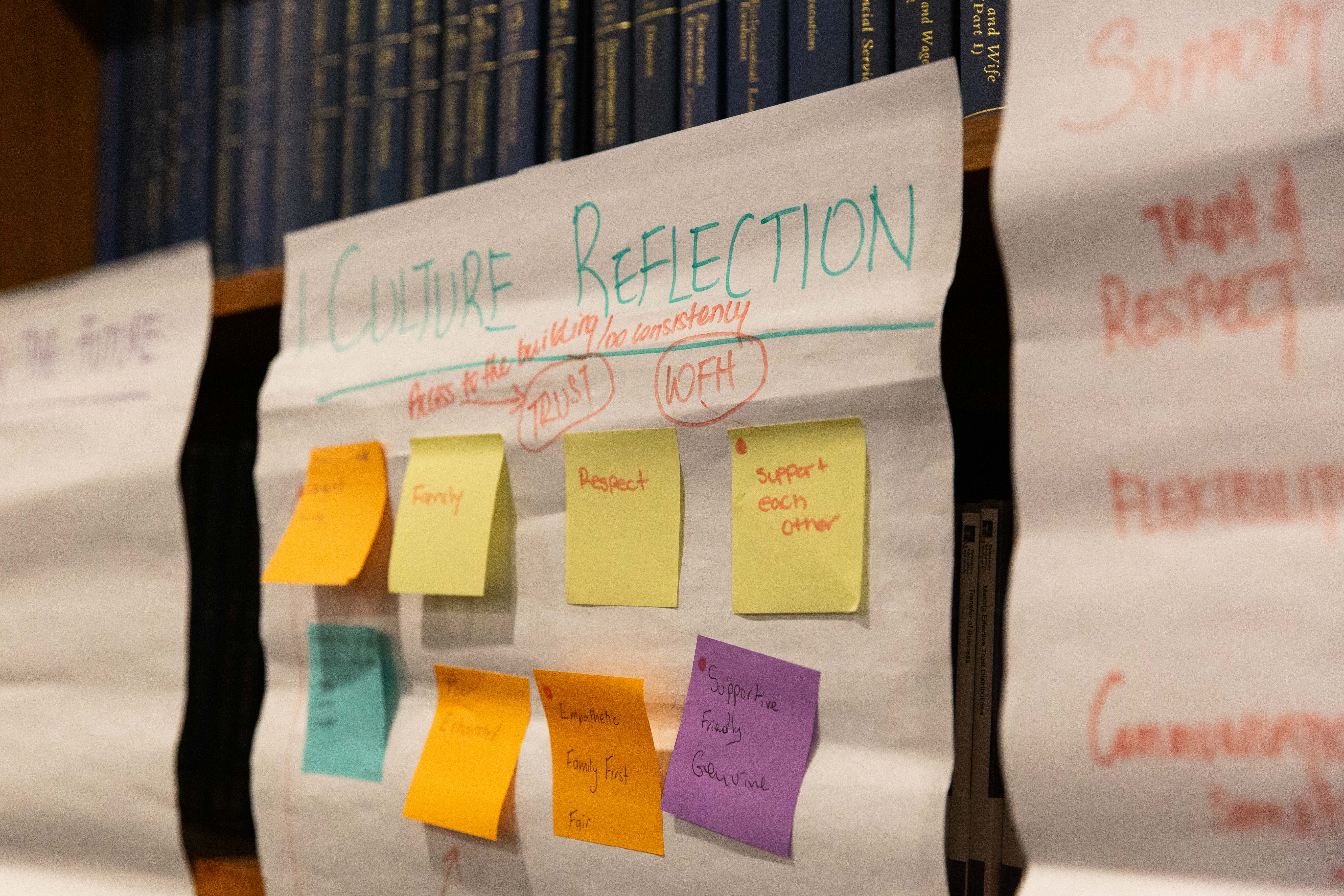
Rather than developing the values behind closed doors, the process brought together Murdoch Clarke’s leadership team, Culture Committee and staff to shape the outcome collectively. Through workshops and collaborative sessions, six key themes emerged – capturing the principles that guide how the firm works, makes decisions, and serves its clients.
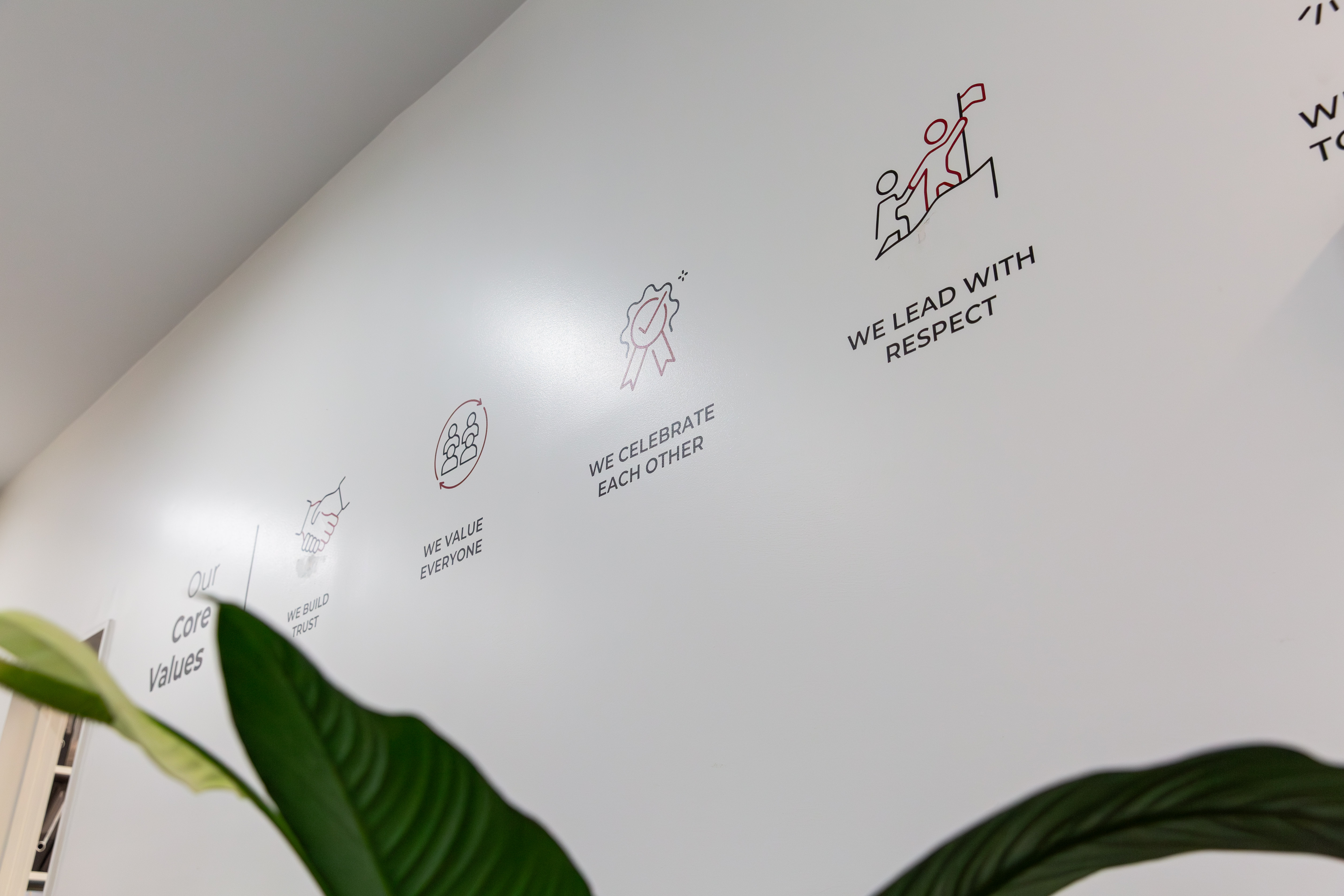
The result was more than a set of words on a wall. The values now act as a practical framework for behaviour, communication and decision-making across the organisation.
In a competitive professional services environment, standing for something meaningful can make a real difference.
“Defining Murdoch Clarke’s values had been a project contemplated by the business for a long time. We were so pleased to work with The Project Lab. They made the process easy, managed it in a way that incorporated the views of the whole organisation, and helped turn ideas into practical ways to live our values. It’s exciting to now see those values on our walls and implemented across the business.” – Aled Vince , Partner at Murdoch Clarke.
In Cashman’s experience as both a strategic consultant and business leader, committed leadership is essential to any successful cultural initiative. This perspective reinforced by various global studies around employee disengagement and distrust. According to Gartner, fewer than half of employees surveyed say they trust their company leaders.
For organisations seeking to strengthen culture, rebuilding that trust is often the starting point.
“Ultimately, culture is built on trust,” says Cashman. “And trust has to be earned. Leaders play a critical role in shaping culture through their everyday decisions and behaviours.”
“If leaders consistently live the values, and reflect them in their management, and priorities, then trust can grow from that foundation of visible, meaningful behaviour. That’s what matters to people – are you really walking the talk?”
At The Project Lab, we work alongside organisations to define, embed, and activate values that genuinely reflect who they are and how they operate.
Our team of experienced culture-change specialists help organisations move beyond posters and statements – toward practical frameworks that align leadership, strategy, and behaviour.
If your organisation is rethinking culture, leadership, or transformation, we’d welcome the conversation.
What role do values play in your organisation’s decision-making? Get in touch to explore how we can help make it matter.
Enjoyed this? Subscribe to The Tasmanian Approach newsletter

-3.png)