-3.png)


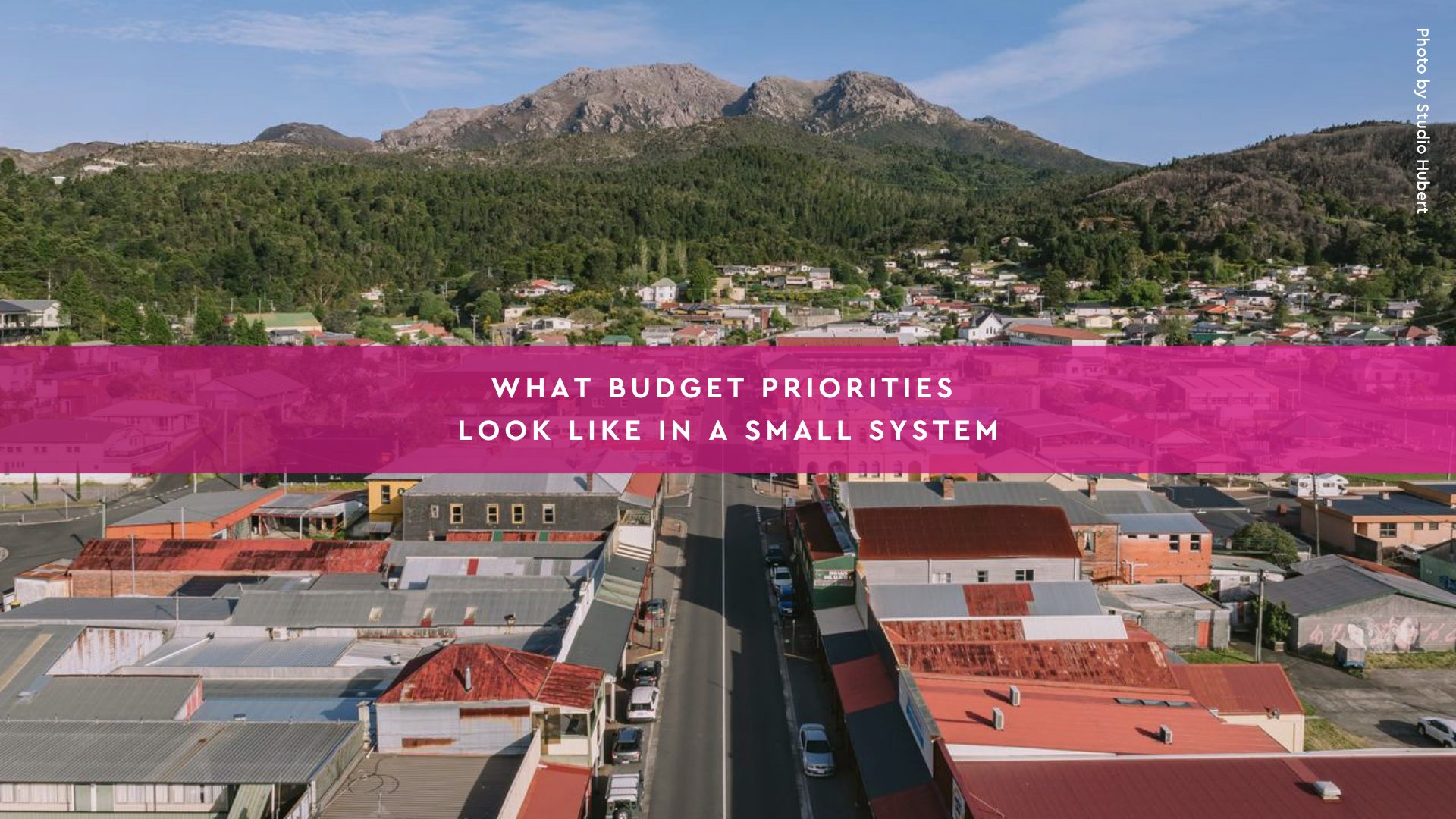
Welcome to The Tasmanian Approach by The Project Lab. Sharing the latest instalment of our bite-sized reports on how Tasmania and Tasmanian businesses are responding to today's most pressing issues.
As those priorities move through organisations, projects, communities and workplaces, they reveal something about the state itself. In a smaller, more connected system, both opportunities and challenges are easier to see.
One of the defining characteristics of Tasmania is that decisions rarely stay where they started.
A budget announcement may begin in Parliament, but its effects are often felt far beyond government. They can influence jobs, projects, services, business confidence and community demand.
In larger jurisdictions, these flow-on effects can be difficult to see. In Tasmania, they're often much more visible because the links between sectors are closer together. Many organisations work with the same workforce, suppliers and communities.
A reduction in public sector hiring can influence not only government agencies, but also recruitment firms, training providers, universities and local businesses that rely on that workforce.
Government is not simply a policymaker. It is a major employer, a purchaser of goods and services, a funder of programs and a partner to many organisations. When priorities shift, those effects can travel through the system quickly.

Ben Cashman, CEO of The Project Lab, sees this play out regularly across organisations and sectors.
"In Tasmania, you can often see the flow-on effects of a decision quite quickly. A policy shift might start in government, but before long it is showing up in workforce conversations, supplier decisions, community demand or project delivery. That closeness is part of what makes leadership here different. You have to understand your own organisation, but you also have to understand the system around it."
Tasmania's size is often described as one of its strengths, but it also shapes how change is experienced.
The state remains Australia's oldest and slowest-growing with modest population growth and an ageing population influencing workforce availability, service demand and long-term planning.
At the same time, Tasmania was recently reported as the only Australian state with both positive business confidence and positive business conditions in the latest NAB Business Survey.

Tasmania is navigating fiscal challenges while continuing to create opportunities through investment and business growth. For leaders, the challenge is understanding how those different forces interact across a highly connected system.
In larger economies, growth can mask pressure points for years. In Tasmania, workforce shortages, funding changes and shifts in demand tend to become visible earlier. That visibility creates risk, but it also gives leaders an opportunity to respond faster.
Recent business confidence figures suggest there are still reasons for optimism. In sectors such as tourism and hospitality, confidence often becomes visible in everyday places, from busier cafés and restaurants to growing demand for events, accommodation and local experiences. These are the kinds of signals that show how quickly opportunities can move through a connected economy.
Understanding budget priorities also means understanding where pressure may emerge next.
Research into community wellbeing identifies housing affordability, healthcare access, financial hardship and mental health as some of Tasmania's most significant challenges.

These pressures affect more than one sector. Community organisations may see increased demand for support, while businesses and government agencies face growing complexity in workforce planning and service delivery.
In Tasmania, many of these challenges are not addressed by government alone. Community organisations and not-for-profits often provide critical services, advocacy and support, helping people navigate complex issues while contributing to the resilience of the broader system. As demand grows, so too does the importance of ensuring these organisations have the capability, resources and specialist support needed to continue delivering value with limited resources.
For leaders, the task is not simply understanding what the budget means for their organisation, but what it means for the wider system they operate within.
What pressures are emerging? Where might demand increase? Which partnerships are becoming more important?
In a state as connected as Tasmania, these questions matter because the impacts of decisions are often visible sooner. While that can create challenges, it also gives organisations more opportunity to adapt, collaborate and respond.

The real significance of a budget is not what is announced on the day, but how those priorities shape decisions in the months and years that follow.
For Tasmania, the 2026 Budget is a reminder that workforce changes, funding decisions and investment priorities rarely stay in one place. They ripple across businesses, communities and services.
And in Tasmania, where those connections are often easier to see, understanding the wider system may be one of the most valuable capabilities a leader can have. Leaders who can see these connections earlier are often better placed to prepare for change before it reaches their organisation.
Understanding how decisions ripple through a connected system is only the first step. The next is deciding how to respond.
As you consider what the 2026 Tasmanian Budget may mean for your organisation, ask:
In a connected system, organisations that recognise these shifts early are often better positioned to adapt.
The Project Lab helps Tasmanian organisations understand complex challenges, strengthen capability and respond with confidence.
Get in touch to explore how we can help your organisation adapt, grow and make an impact.
–
Enjoyed this? Subscribe to The Tasmanian Approach newsletter

-3.png)